
Design Freedom vs Material Waste in Acoustic Panels — How to Reduce Waste Without Changing the Design
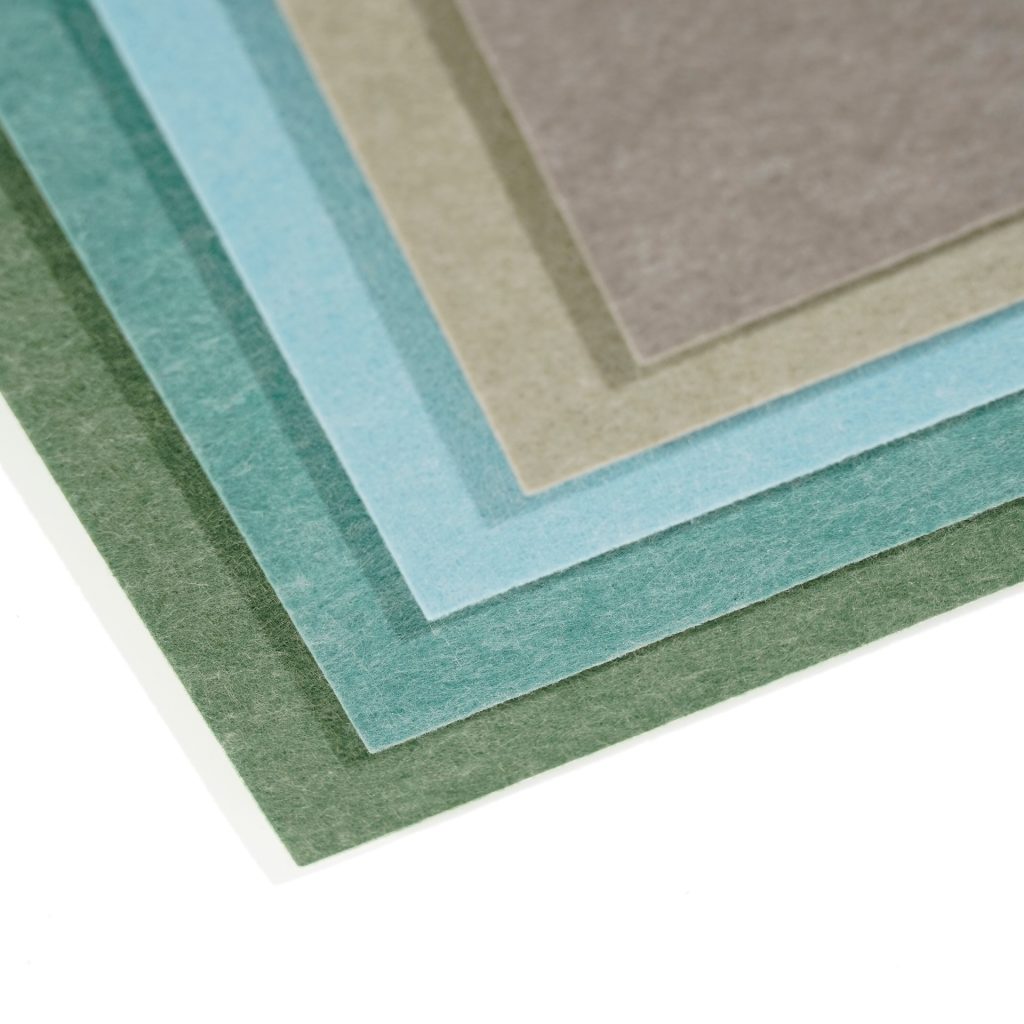
Custom acoustic panels allow architects to create strong visual identity.
CNC patterns, irregular shapes, and non-standard module sizes are now common in offices, schools, and public buildings.
But once production starts, many projects face an unexpected issue:
Material waste increases significantly.
And then the question appears:
Why does the required material quantity exceed the visible installed area?
This article explains why material waste happens in custom acoustic panel manufacturing — and how to reduce it without compromising design intent.
Why Material Waste Increases in Custom Acoustic Panel Projects
Most PET acoustic panels and fiber acoustic boards are produced in standard sheet sizes, typically:
1200 × 2400 mm
or
1200 × 1200 mm
When project modules do not align with these base sheet dimensions, sheet utilization decreases.
Common reasons include:
Irregular geometry panels
Deep CNC cutting patterns
Complex groove layouts
Non-standard panel width
Randomized design compositions
In these cases, offcuts between shapes may not be reusable.
The result is higher material consumption and increased project cost.
The issue is not design quality.
It is manufacturing alignment.
Is Complex Design the Real Problem?
Not necessarily.
In our experience, high material waste is often caused by late-stage coordination, not by design complexity itself.
When manufacturing is involved only after drawings are finalized, optimization becomes limited.
However, when panel layout and cutting logic are reviewed earlier, waste can often be reduced by 5–15%.
Small adjustments can make a big difference, such as:
Aligning panel module width with sheet size
Reviewing nesting layout before production
Adjusting spacing between CNC cuts
Planning repeatable cutting rhythm
These changes usually do not affect visual outcome.
But they improve material efficiency significantly.
Laminated Panels vs Single-Layer Panels — Structural Impact on CNC Cutting
Another factor often overlooked is panel structure.
For example:
12+12 mm laminated panels
vs
single-layer 24 mm acoustic panels
Although both show 24 mm thickness, the internal structure is different.
When deep CNC cutting or narrow sections are introduced, laminated panels may expose the glue layer.
This can influence:
Structural stability
Edge durability
Long-term performance
Therefore, panel structure should be evaluated together with cutting depth and pattern complexity.
Thickness alone does not define performance.
How to Reduce Material Waste in Acoustic Panel Manufacturing
If you are developing a custom acoustic panel project, consider reviewing these points before final production:
Confirm standard sheet size used for manufacturing
Align panel module dimensions with sheet format
Review CNC cutting layout for nesting efficiency
Evaluate laminated vs single-layer structure
Discuss waste percentage estimation during quotation stage
Early coordination between architect, designer, and manufacturer reduces:
Hidden material cost
Production risk
Budget pressure
Sustainability impact
Once panels enter production, changes become expensive.
Early discussion is always more efficient than post-production correction.
Frequently Asked Questions (FAQ)
Why is acoustic panel material quantity higher than installed area?
Because panels are cut from standard sheets. Irregular shapes or inefficient nesting increase offcuts, leading to higher material consumption.
Can material waste be reduced without changing the design?
In many cases, yes. Adjusting module size or reviewing nesting layout can improve sheet utilization by 5–15% without visible design changes.
Are laminated 12+12 panels structurally the same as single-layer 24mm panels?
No. Although thickness is the same, internal glue layers in laminated panels can influence structural behavior during deep CNC cutting.
Is higher waste always caused by complex patterns?
Not always. Late manufacturing involvement is often the main reason for inefficient material usage.
Need Technical Review Before Production?
If you are planning a custom PET acoustic panel project and want to:
Optimize material utilization
Reduce waste percentage
Review CNC cutting feasibility
Compare laminated vs single-layer structure
Our technical team can support early-stage review and layout evaluation.
Contact our acoustic support team to discuss your project requirements.