
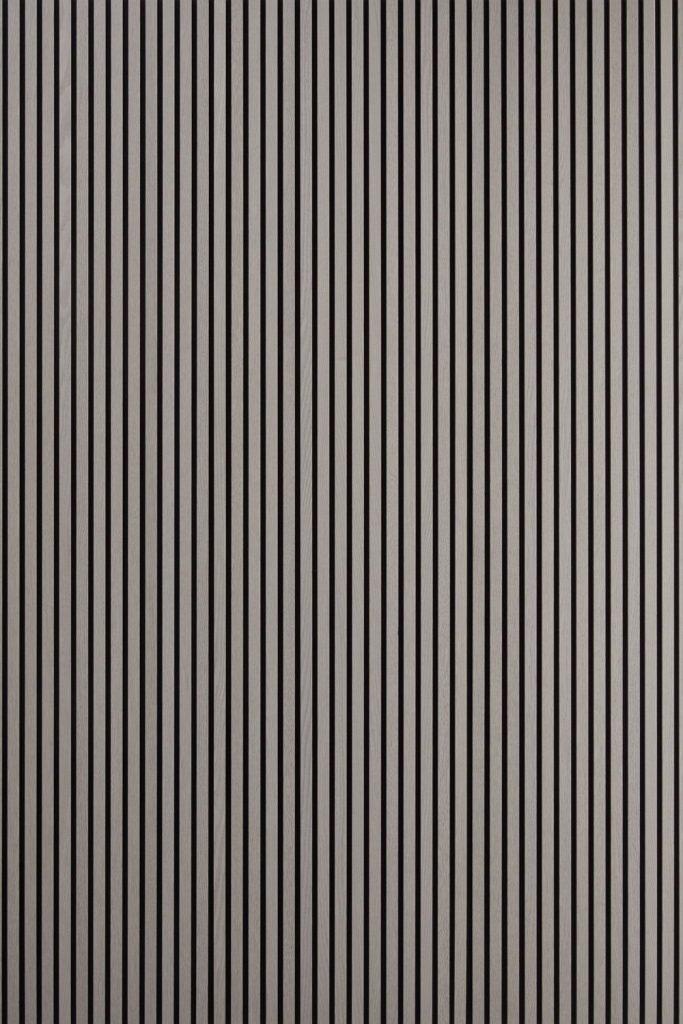
There are many small holes inside and on the surface of the acoustic board, through which the sound can enter the interior of the acoustic panel. Since these apertures are irregular, it is difficult for sound to come out once it enters, eventually causing the sound energy to be lost.
At present, the types of acoustic panels are more diverse, and the materials of different types of acoustic panels are different. The following mainly introduces several commonly used acoustic panels.
Wooden Acoustic Panel. It is precisely machined based on the principle of sound and consists of veneer, core material, and sound-absorbing thin felt. There are two types of wood acoustic panels: slotted wood sound-absorbing panels and perforated wood sound-absorbing panels.
Fabric Acoustic Panel, this fabric acoustic panel is composed of soft fabric veneer, frame-group, sound-absorbing cotton, and waterproof aluminum felt. Its core material is centrifugal glass wool.
Polyester fiber acoustic panel is an ideal acoustic decorative material. It is made of polyester fiber by hot pressing and with a sound-absorbing function. Compared with acoustic panels of other materials, polyester acoustic panel do not contain any glue or any formaldehyde, which are more environmentally friendly and can be used with peace of mind. And you can cut the size and match the color according to the size of the space. It is totally depend on your imagination, base on your unique design, polyester acoustic panel this material can be processed to be any shape, with various color combination.
Better to consider tips when choosing polyester acoustic panels
-Test Report, If an acoustic panel advertises that its sound-absorbing performance is good, but there is no official test report, then you must be careful and pay attention to identifying the manufacturer’s credit and goodwill to avoid being deceived.
-Easy to Install. To achieve a good sound-absorbing effect, the installation of the acoustic panel must be very simple, otherwise, the installation personnel on-site will make mistakes, resulting in the sound insulation value of the wall not reaching the ideal sound-absorbing effect.
-Thickness & Weight. To improve the sound insulation effect, many acoustic panels will increase their thickness and weight. Although it can improve the sound insulation effect to a certain extent, it also leads to many disadvantages, like low sound absorption efficiency, occupying living space, difficult installation, and the high freight.
While paying attention to the sound-absorbing effect of the acoustic board, we should also pay attention to other functions of the acoustic board. For example, if there are many people in the room, it is necessary to choose a sound-absorbing board with strong impact resistance. If it is in a humid area like bathrooms, acoustic panels with better waterproof performance are required.